
The Burden of the Unseen Choice
Why society judges your finish line while completely ignoring the actual terrain you had to navigate.
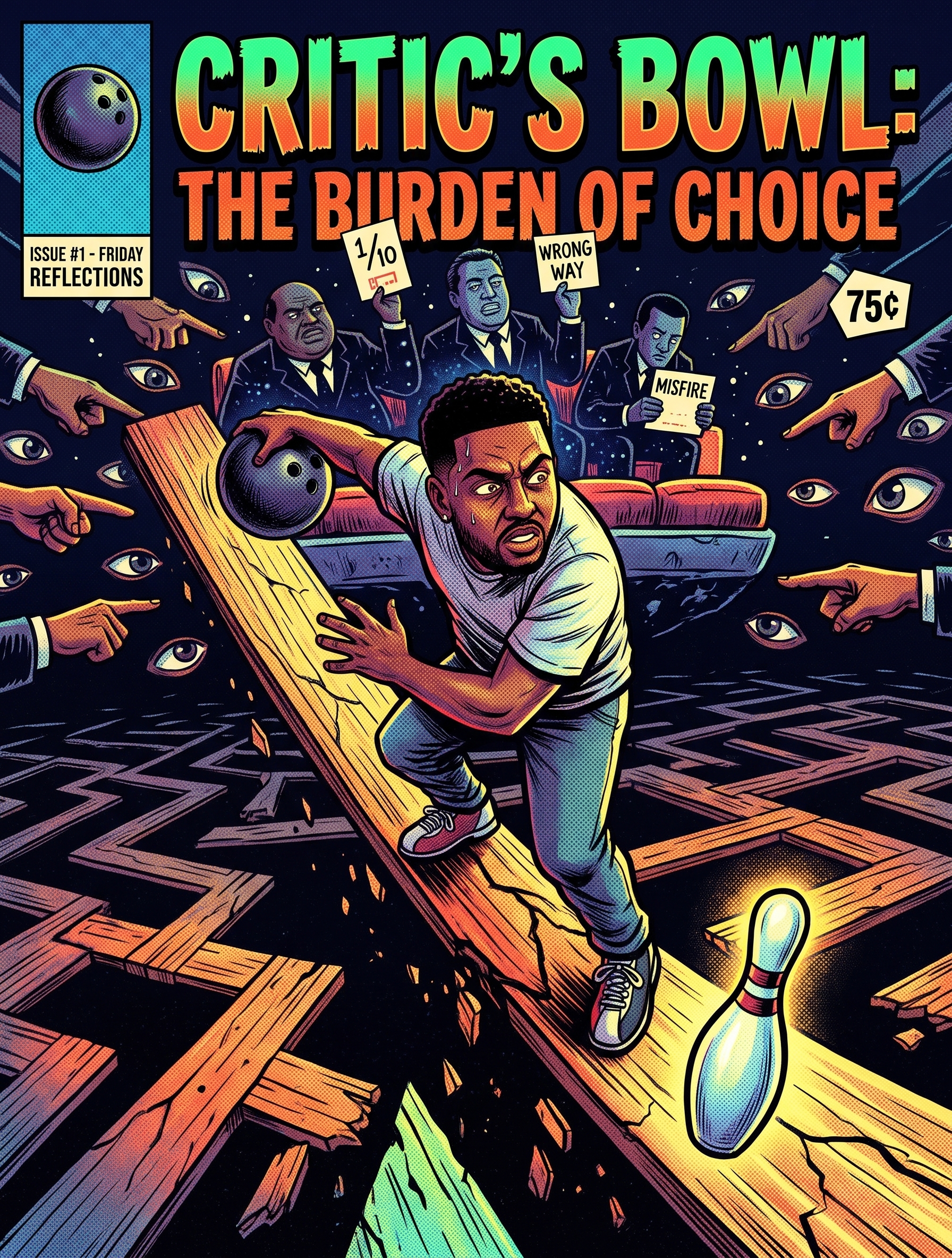

Picture this: I’m getting critiqued on a bowling app I built. The critics are looking at the features, questioning the logic, and heavily implying that I don't know the first thing about bowling culture. They were judging the app as if it were a cynical cash grab by a disconnected tech bro.
The reality? I bowl every single week. I wear the shoes. I live the lane life. I didn't build the app as a random side hustle; I built the exact tool I needed for myself because I actually embody the culture they thought I was ignoring.
They judged the visible outcome without knowing a single thing about the invisible reality.
It’s hilarious when it happens over a bowling app. It is significantly less funny when it happens with your life.
Society has a nasty habit of evaluating the quality of our decisions based purely on the visible outcome, completely ignoring the options we actually had at the time. It’s called outcome bias, and it relies heavily on the "Illusion of Free Options"—the assumption that everyone has access to a broad menu of fantastic, consequence-free paths.
A while back, I took a hard left into entrepreneurship. From the outside, the spectators in the stands were confused. To them, it looked like I was losing my ambition or walking away from a solid trajectory. They were evaluating my external move with zero access to my internal dashboard.
What they couldn't see was the exhaustion of pouring my time and energy into building tools for causes I had absolutely no attachment to. My "meaningless work" gauge was flashing red. I hadn't lost my ambition at all—my ambition just pivoted. It changed coordinates to target self-gratification and pride in my own work. I was seeking success from a completely different viewpoint.
But outsiders never see the constraints. They don't see the burnout, the forced trade-offs, or the ticking clock. They only see the final move on the board, not the invisible pressure that forced your hand. Hindsight moralizing costs nothing. It is incredibly easy to criticize a path once the full picture is known, claiming you "should have known better" when, in the moment, you were choosing between two bad options.
So, I have to ask: Where in your life are you letting outside observers grade a test they didn't even have to take?
Recognizing the gap between internal choices and external decisions is the ultimate cheat code for dropping the need for outside validation. Society will always judge the visible finish line, but only you know the actual terrain you had to navigate to get there.
The Friday Question:
What is a choice you made that looked totally bizarre to outsiders, but made perfect, survival-level sense to you in the moment?
Drop it in the comments below. Let's validate some "bad" decisions today.
See you next Friday, when we’ll be dissecting a completely different kind of invisible trap.
Enjoyed this post?
Get posts like this one in your inbox, once a week.
One email a week, no spam, unsubscribe anytime. Join 85 subscribers.
Comments (0)
Leave a comment
No comments yet. Be the first to share your thoughts!